How AI-Assisted Development is Changing the 2026 Job Market
The New Era of Engineering
As we move through 2026, the landscape of software engineering has undergone a fundamental transformation. The era where a developer's primary value was measured by their ability to manually write syntax is behind us. Today, AI-assisted development has moved from a novelty to the industry standard, redefining what it means to be a professional in the technology sector.
To understand the job market of 2026, we must look at the preceding decade. The shift began with simple autocompletion, evolved through the GitHub Copilot era of 2021-2023, and reached a tipping point in late 2024 when AI agents became capable of multi-step reasoning and autonomous repository management. By 2025, the industry witnessed the "Great Abstraction," where the syntax of programming languages like Python and Rust became secondary to the semantic intent of the developer. This evolution mirrors the transition from assembly language to high-level languages in the 20th century, only now the "compiler" is a generative model capable of understanding natural language specifications.
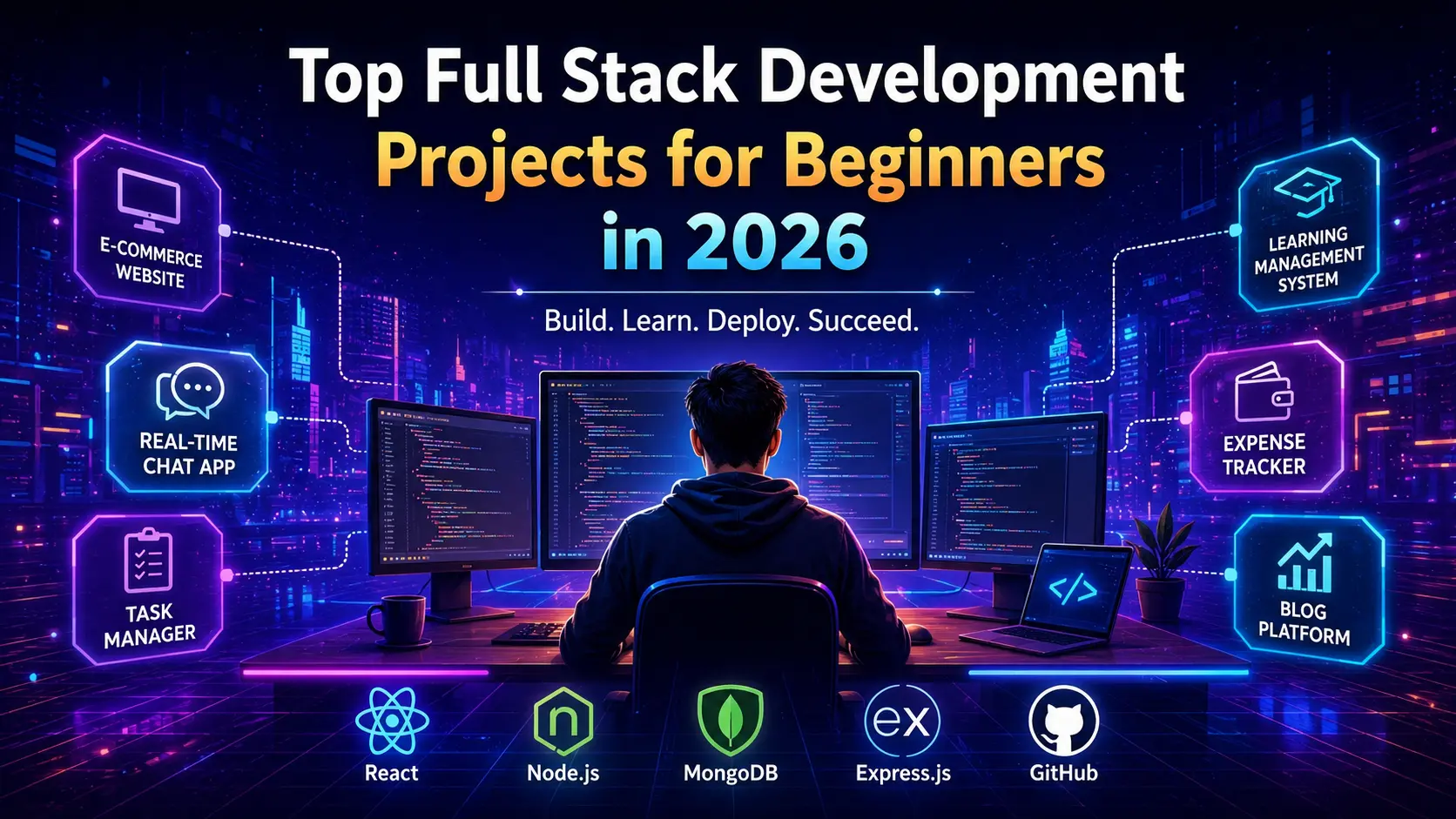
Top Full Stack Development Projects
The Architect as Orchestrator: Redefining Seniority
In 2026, senior engineering roles have been fundamentally restructured. The "Orchestrator" model has replaced the traditional lead developer. A senior engineer no longer spends 60% of their day in an IDE writing code; instead, they manage a fleet of AI agents. Architectural oversight now involves defining the boundaries of microservices, managing state across distributed systems, and ensuring that the AI-generated infrastructure adheres to rigorous "well-architected" frameworks. This orchestration requires a level of systems thinking that was previously only expected of CTOs. The senior developer acts as the conductor, ensuring that disparate pieces of AI-generated logic harmonize into a secure and performant whole.
Accelerated Development Cycles: 2026 Case Studies
The impact of specialized AI agents is best illustrated through current industry performance. In a recent study of fintech startups in mid-2026, the "Time to Market" for MVP (Minimum Viable Product) features decreased by 70%. For instance, a leading neo-bank utilized a specialized AI security agent to audit their smart contracts in real-time. What previously took a team of three security researchers two weeks was accomplished in four hours with higher precision. Similarly, in the realm of e-commerce, AI-driven UI agents now generate personalized front-end components on the fly based on user behavior, reducing the need for manual A/B testing cycles and allowing designers to focus on high-level brand strategy rather than component variations.
From Syntax to Systems Thinking
In the 2026 job market, the technical barrier to entry for building complex applications has shifted. Large Language Models (LLMs) and specialized AI agents now handle the boilerplate, unit tests, and even complex refactoring with high reliability. This change has forced a pivot in the required skill set for developers. Employers are no longer just looking for "coders"; they are looking for software architects and product engineers who can direct AI to achieve specific business outcomes.
The core competency today is "Prompt Engineering and Verification." It is no longer enough to know how to write a function; a developer must know how to describe the requirements of that function so precisely that an AI can generate it, and then they must have the deep architectural knowledge to verify that the generated code is secure, performant, and scalable.
The Rise of the Polymath Developer
The efficiency gains provided by AI mean that the traditional silos between front-end, back-end, and design have blurred. A modern professional might start their journey with a comprehensive Full Stack Developer Course, Web Design Course to understand the foundational principles of user experience and server-side logic, but their daily work involves orchestrating an array of AI tools to build end-to-end features in hours rather than weeks.
This breadth of knowledge is critical. In 2026, the most successful developers are those who understand the "Full Product Lifecycle." Because AI can generate the code, the human's role is to ensure that the code solves the right problem for the user. This requires a professional tone and an analytical mindset that goes beyond the screen.
The Specialized Skillset of the 2026 Developer
While the "Full Product Lifecycle" is the broad goal, several specific technical competencies have emerged as non-negotiable. First is "LLM Fine-Tuning and RAG (Retrieval-Augmented Generation) Management". Developers must know how to ground AI outputs in proprietary company data to prevent hallucinations. Second is "Ethical Auditing and Bias Detection". As AI systems make more autonomous decisions, such as in hiring or credit scoring, engineers are legally and ethically responsible for auditing the training data and output for systemic bias. Finally, "System Design at Scale" has seen a resurgence. When code generation is free, complexity tends to explode; the modern developer must be a master of simplicity, ensuring that the sheer volume of code produced remains maintainable.
Security and Ethics in the AI Age
With AI generating a significant portion of the global codebase, security has become the paramount concern. Junior developers in 2026 are trained heavily in "AI Oversight." They must identify subtle hallucinations in code that might lead to zero-day vulnerabilities. Furthermore, ethical considerations regarding data privacy and algorithmic bias are now part of the technical review process.
Future-Proofing Your Career: The Hybrid Strategy
For students and professionals looking to stay relevant, the strategy is twofold: deep technical foundations and broad creative adaptability. One should never abandon the fundamentals; understanding how a database index works or how memory management is handled is what allows an engineer to catch the 1% of errors an AI makes that could lead to a catastrophic failure. Continuous learning is no longer a choice but a survival mechanism. Hybrid skills combining software engineering with domain expertise in medicine, law, or climate science are particularly valuable, as AI can bridge the technical gap, but it cannot yet provide the nuanced domain intuition required for breakthrough innovations.
Conclusion: Adapting to the Future
The 2026 job market does not signal the end of the developer; it signals the evolution of the craft. By automating the mechanical aspects of coding, AI has freed humans to focus on innovation, accessibility, and complex problem-solving. For those willing to embrace these tools while maintaining a rigorous understanding of the underlying technology, the opportunities are more expansive than ever before.