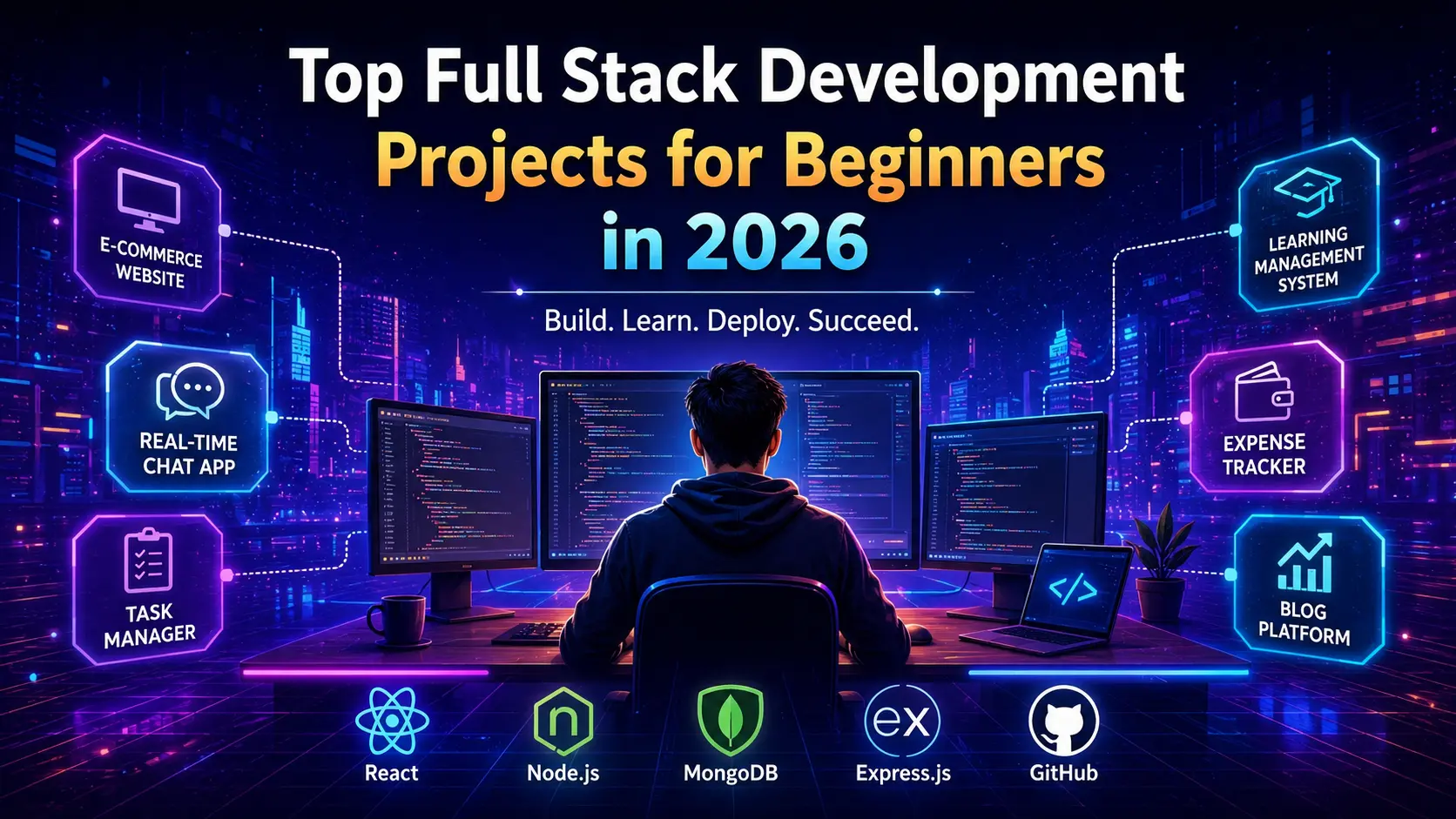
Top Full Stack Development Projects for Beginners in 2026
The demand for full-stack developers continues to grow rapidly in 2026. Companies are looking for professionals who can build complete web applications, manage databases, create user-friendly interfaces, and deploy scalable solutions. For beginners entering the tech industry, building real-world projects is one of the best ways to learn full-stack development and create a portfolio that attracts employers.
If you're learning technologies like React, Next.js, Node.js, Express.js, MongoDB, PostgreSQL, Supabase, or AI-powered APIs, working on practical projects can significantly improve your coding skills. In this blog, we'll explore the top full stack development projects for beginners in 2026 that align with current industry trends and help you stand out in the competitive job market.
Why Full Stack Projects Matter in 2026
Learning programming through tutorials is helpful, but building projects teaches you how different technologies work together. Full-stack projects help you:
- Understand frontend and backend integration
- Learn database management
- Improve problem-solving skills
- Build a professional portfolio
- Gain confidence in deploying applications
- Prepare for technical interviews
Modern employers value practical experience, and project-based learning remains one of the most effective ways to gain it.
1. AI-Powered Personal Productivity App
Why This Project is Trending in 2026
AI assistants are becoming an essential part of personal and professional productivity. Companies and individuals rely on smart tools to automate repetitive tasks and improve efficiency.
Key Features to Build
- Smart task prioritization
- AI-generated daily schedules
- Voice-to-task conversion
- Productivity analytics dashboard
- Calendar synchronization
Real-World Applications
Businesses use productivity software to streamline workflows, making this project highly relevant for modern workplaces.
Challenges You Will Learn
- API integration with AI models
- Managing user data securely
- Handling asynchronous requests
2. Modern E-Commerce Marketplace
Why Beginners Should Build It
E-commerce applications cover almost every aspect of full-stack development, including authentication, databases, APIs, and payment processing.
Advanced Features You Can Add
- AI-powered product recommendations
- Wishlist functionality
- Discount coupon system
- Multi-vendor support
- Inventory management
Business Value
Online shopping platforms continue to generate billions in revenue globally, making e-commerce development a highly sought-after skill.
Learning Outcomes
- Payment gateway integration
- Product management systems
- User experience optimization
3. AI Resume Builder
Why It Is a Hot Project
The job market is becoming more competitive, and professionals increasingly use AI tools to improve their resumes and cover letters.
Core Functionalities
- Resume template selection
- AI-generated professional summaries
- ATS optimization suggestions
- One-click PDF download
- Resume score analysis
Skills You'll Develop
- AI prompt engineering
- File generation and downloads
- User profile management
Potential Enhancements
- Cover letter generator
- LinkedIn profile analyzer
- Career recommendation system
4. Real-Time Chat Application
Importance of Real-Time Communication
From customer support to team collaboration, real-time messaging applications are critical in today's digital world.
Features to Include
- One-to-one messaging
- Group conversations
- Media sharing
- Typing indicators
- Read receipts
Technical Concepts Covered
- WebSocket implementation
- Real-time event handling
- Scalable backend architecture
Future Enhancements
- Video calling integration
- AI chatbot support
- Message translation feature
5. AI Content Generator Platform
Growing Demand for AI Content Tools
Businesses, marketers, and bloggers use AI-powered content generators to improve productivity and content quality.
Main Features
- Blog writing assistant
- Social media caption generator
- SEO keyword suggestions
- Content rewriting tools
- Multi-language support
Technologies You'll Explore
- Natural Language Processing
- Third-party AI APIs
- Content management systems
Career Benefits
This project demonstrates expertise in one of the fastest-growing sectors of software development.
6. Learning Management System (LMS)
Why Education Technology is Booming
Online learning continues to grow as educational institutions and businesses adopt digital training platforms.
Features to Develop
- Course creation dashboard
- Video lesson management
- Student progress tracking
- Online quizzes and assessments
- Certificate generation
Industry Relevance
Educational platforms are widely used by schools, universities, and corporate training departments.
Skills Learned
- User role management
- Content delivery systems
- Data reporting and analytics
7. Fitness and Health Tracking App
Rising Popularity of Health Apps
People are becoming increasingly health-conscious, driving demand for digital wellness solutions.
Key Features
- Daily workout tracking
- Calorie intake monitoring
- Goal-setting functionality
- Progress visualization charts
- AI-generated fitness plans
Technical Learning Opportunities
- Data visualization
- Mobile-responsive design
- User engagement strategies
Future Improvements
- Wearable device integration
- Health report generation
- Personalized coaching recommendations
8. Property Rental Platform
Why This Project Stands Out
Real estate applications involve complex business logic and provide excellent experience in handling large datasets.
Essential Features
- Property listing management
- Advanced search filters
- Booking requests
- Image galleries
- User reviews and ratings
Real-World Impact
Property rental platforms help users find homes, apartments, and commercial spaces efficiently.
Development Skills Gained
- Search optimization
- Database relationships
- File storage management
9. AI Interview Preparation Platform
Growing Need for Interview Preparation Tools
Job seekers increasingly use AI-based coaching tools to improve interview performance.
Features to Include
- AI mock interviews
- Automated feedback reports
- Technical question bank
- Coding assessments
- Performance tracking
What You'll Learn
- Speech recognition APIs
- AI feedback systems
- Performance analytics
Advanced Enhancements
- Video interview simulations
- Personalized learning plans
- Company-specific interview preparation
10. Personal Finance Management System
Why Financial Apps Are Popular
People want better control over spending, budgeting, and long-term financial planning.
Core Features
- Expense tracking
- Budget creation
- Income management
- Savings goals
- Financial analytics dashboard
Industry Relevance
Financial technology (FinTech) remains one of the fastest-growing technology sectors.
Skills You Will Gain
- Data visualization
- Financial calculations
- Security best practices
- User data management
Best Tech Stack for Beginners in 2026
Choosing the right tech stack can make your learning journey smoother and help you build industry-ready projects. In 2026, beginners should focus on technologies that are beginner-friendly, widely adopted, and in high demand among employers.
Frontend
React.js, Next.js, Tailwind CSS, and TypeScript are excellent choices for building fast, responsive, and modern user interfaces. These technologies help developers create scalable web applications while improving performance and user experience.
Backend
Node.js and Express.js allow developers to build powerful server-side applications using JavaScript. This combination is widely used for creating APIs, handling business logic, and managing application data efficiently.
Database
MongoDB, PostgreSQL, and Supabase are popular database solutions for modern applications. MongoDB offers flexibility, PostgreSQL provides robust relational data management, and Supabase simplifies backend development with built-in features.
Authentication
Tools like Clerk, Firebase Auth, and JWT make user authentication secure and easy to implement. They help developers manage user accounts, login systems, and access control effectively.
Deployment
Platforms such as Vercel, Netlify, Railway, and Render simplify the deployment process, allowing developers to host and share their projects with minimal configuration.
AI Integration
With AI becoming a core part of modern applications, integrating OpenAI API and Google Gemini API can help you build smart features such as chatbots, content generators, recommendation systems, and AI assistants.
By learning these technologies and applying them in real-world projects, beginners can build a strong foundation for a successful full stack development career in 2026.
Tips for Building Successful Full Stack Projects
Start Small
Don't try to build everything at once. Begin with basic features and gradually add advanced functionality.
Use Git and GitHub
Version control is an essential skill for every developer.
Focus on UI/UX
A clean user interface can make your project stand out.
Deploy Your Projects
Employers prefer candidates who can deploy working applications.
Document Your Work
Write clear README files explaining your project's purpose, setup process, and features.
Add AI Features
AI integration is one of the biggest trends in 2026. Even simple AI features can significantly enhance your portfolio.
Conclusion
Building full-stack projects remains the fastest way to become job-ready in 2026. Whether you choose an AI-powered productivity app, an e-commerce platform, a real-time chat application, or a finance management system, each project will strengthen your technical skills and improve your portfolio.
The most successful beginner developers focus on creating practical applications that solve real-world problems. By working on trending projects that include AI integration, modern frameworks, and cloud deployment, you'll position yourself ahead of many aspiring developers.
Start with one project, complete it thoroughly, deploy it online, and continuously improve it. Consistent project building is the key to becoming a successful full stack developer in 2026.