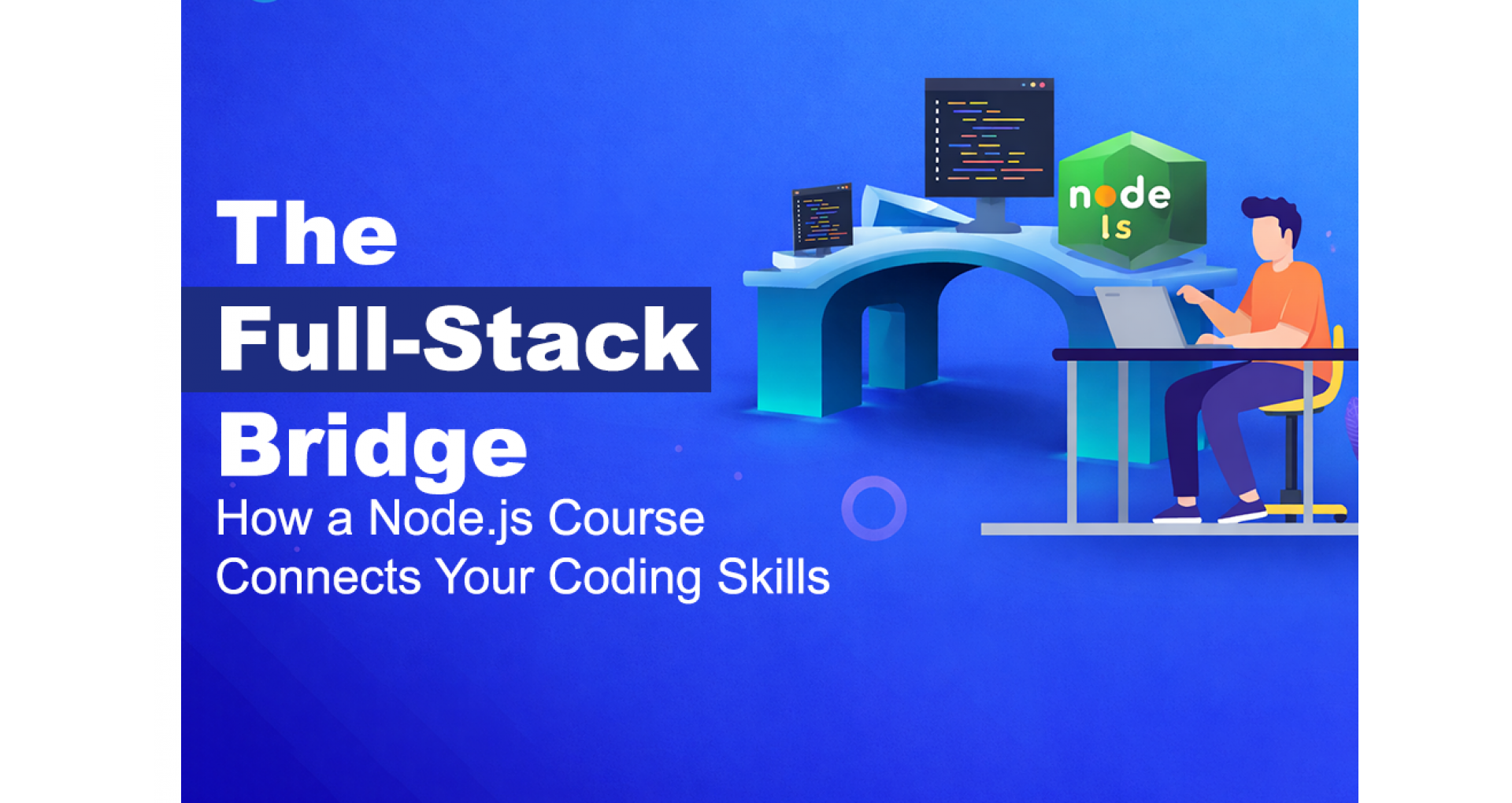
The Full-Stack Bridge: How a Node.js Course Connects Your Coding Skills.
In the world of modern web development, there is often a visible divide. On one side, you have the beautiful, interactive interfaces that users touch and see. On the other, there is the silent, powerful engine that manages data, security, and logic. For many aspiring developers, these two worlds feel like separate islands. However, the most successful creators are those who can navigate both. This is where the "Full-Stack Bridge" comes in, and more often than not, that bridge is built using Node.js.
The Shift from Interface to Infrastructure
When you first start your coding journey, you likely focus on the visual. You learn how to align buttons, choose the right typography, and ensure that a website looks stunning on a mobile phone. But eventually, every developer hits a wall: "How do I save this user’s information?" or "How do I let two people chat in real-time?"
To answer these questions, you have to cross over into backend development. Traditionally, this meant learning an entirely different language like Python or Java or exploring various PHP frameworks. While those are powerful tools, the mental shift can be jarring. You have to learn new syntax, new rules, and a new way of thinking.
Node.js changes that. Because it allows you to use JavaScript on the server, the bridge between the "front" and the "back" becomes much shorter and smoother. You are using the same language you already know to build the infrastructure that powers the entire application.
Why Node.js is the Perfect Connector
Node.js isn't just "JavaScript on a server". It is a runtime environment designed for speed and scalability. If you have already taken a best ReactJS training course, you understand the power of components and reactive data. Node.js follows a similar philosophy of efficiency.
When you integrate Node.js into your skill set, several things happen:
- Unified Logic: You can share code between your frontend and backend. Validations, data structures, and utility functions don't need to be rewritten in a different language.
- Real-Time Capabilities: Node.js excels at "WebSockets". This is what allows for "live" features like instant notifications, collaborative editing (like Google Docs), and live chat.
- JSON Everywhere: Modern web apps speak in JSON (JavaScript Object Notation). Since Node.js is native to JavaScript, handling data from a database and sending it to the frontend feels like a natural conversation rather than a complex translation.
Finding the Right Path
Because the demand for full-stack developers is at an all-time high, the market is flooded with information. It can be overwhelming to decide where to start. Many students find that enrolling in the best NodeJS course is the most effective way to cut through the noise. A structured curriculum doesn't just teach you how to write "Hello World" on a server; it teaches you how to think about security, how to structure a database, and how to handle thousands of users at once without the system crashing.
A peaceful learning journey is one where each lesson builds on the last. Instead of jumping into complex server architecture on day one, a good course will show you how to take a simple contact form you built in HTML and actually make it send an email using Node.js. That "Aha!" moment when you realise you’ve controlled the server for the first time is when the bridge is officially built.
The Full-Stack Mindset
Becoming a full-stack developer is less about "knowing everything" and more about "understanding the connection". When you understand how Node.js communicates with a database, you become a better frontend designer. You start to understand why a certain API call takes a long time or how to structure your React components to make the backend’s job easier.
This holistic view is what employers are looking for in 2026. They don't just want someone who can code; they want someone who understands the entire lifecycle of a request—from the moment a user clicks a button to the moment the data is safely stored in a cloud database.
Conclusion: Crossing the Bridge
The transition from a frontend enthusiast to a full-stack professional is a journey of growth. It requires patience and a willingness to look "under the hood" of the internet. By choosing a path that leverages JavaScript through Node.js, you aren't just adding a line to your resume; you are simplifying your mental workflow.
Building this bridge allows you to take full creative control of your projects. You are no longer limited by what a backend developer can provide for you; you are the one providing the power. It is a rewarding, challenging, and ultimately peaceful transition that turns "coding" into "crafting".