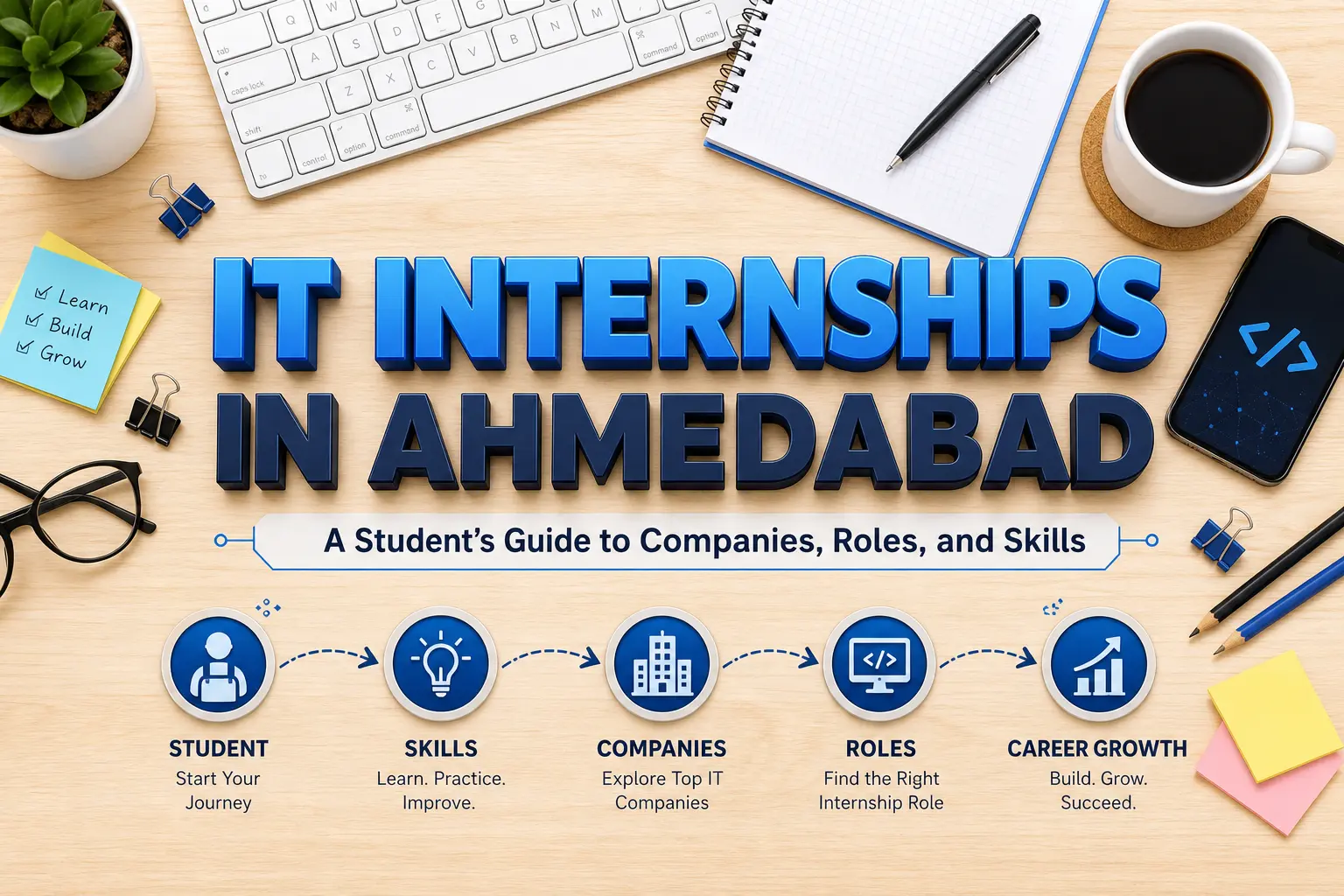
A Student’s Guide to IT Internships in Ahmedabad: Companies, Roles, and Skills
The IT landscape in Ahmedabad is undergoing a massive, structural transformation. As we move further into 2026, the city has firmly established itself not just as a regional operational hub, but as a competitive, high-innovation player in India’s broader digital economy. For students, fresh graduates, and career-switchers, this presents a golden opportunity. However, the antiquated method of securing internships simply by holding a degree is effectively dead. Today’s hyper-competitive market demands a sophisticated combination of technical agility, portfolio depth, and strategic local networking.
Whether you are a final-year engineering student or an enthusiastic coder looking for a transformative summer project, understanding how to navigate the specific Ahmedabad tech ecosystem is critical to your long-term career trajectory. This guide is designed to help you decode current hiring trends, identify high-growth roles, and position yourself as a top-tier candidate in one of the country’s fastest-growing tech hubs.
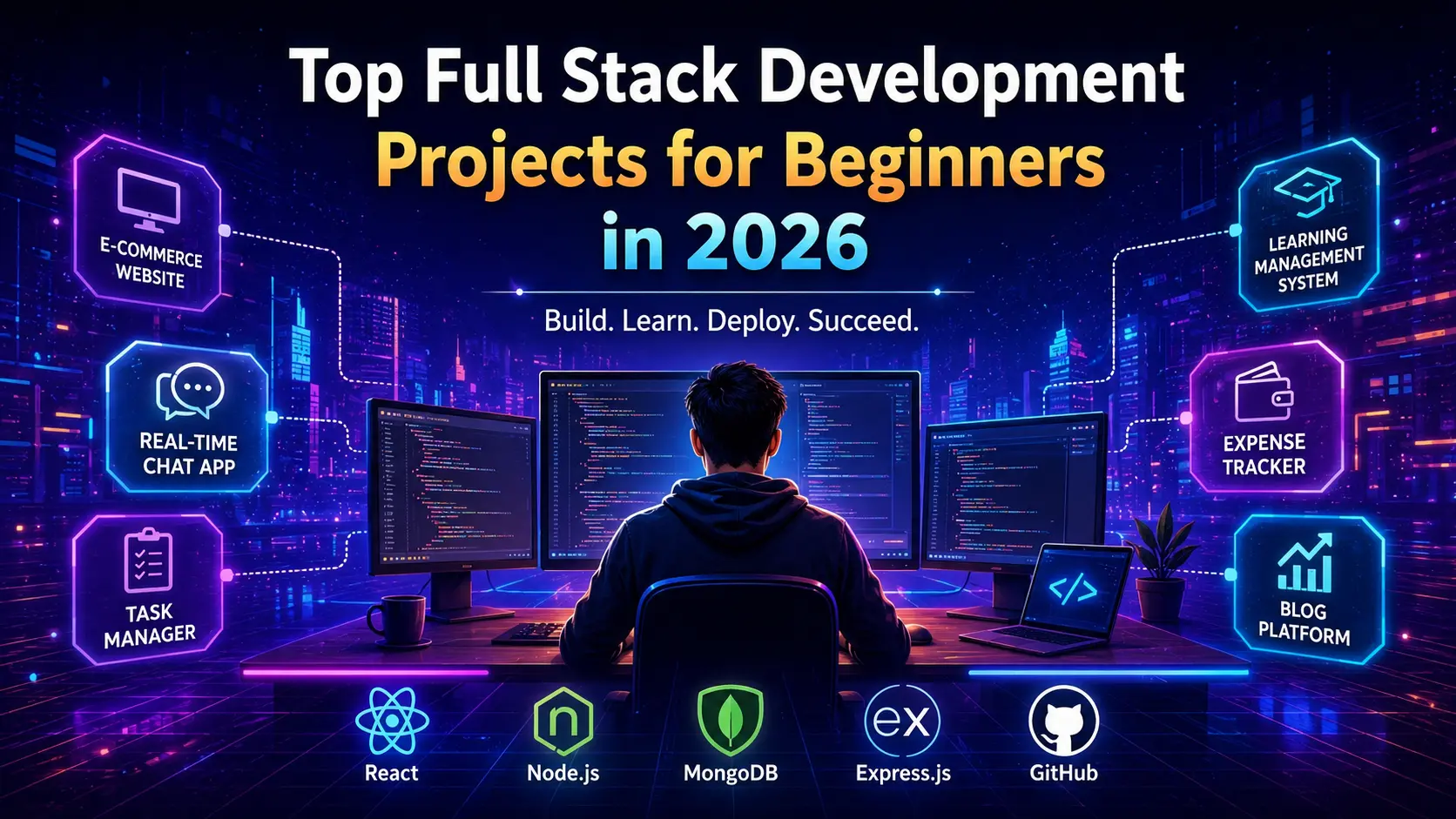
India’s Next Hub for Full Stack Developers
The Evolving IT Landscape in Ahmedabad
Ahmedabad has evolved significantly over the last few years. The massive infrastructure investment into the Gujarat International Finance Tec-City (GIFT City) and the robust development along the SG Highway corridor and Prahlad Nagar have created a diverse ecosystem. It is a blend of established IT giants who provide the foundation and a burgeoning wave of high-growth, AI-focused startups who provide the adrenaline.
Unlike the saturated, impersonal markets of larger metros like Bengaluru or Pune, Ahmedabad offers a distinct "local advantage." It is a tighter community. Your contributions as an intern here are often highly visible, significantly more impactful, and far more likely to be recognized by leadership. In 2026, local companies are no longer just looking for "coders" who can execute tasks. They are hunting for "problem solvers" who understand the business impact of their code. The shift is heavily leaning toward agile, AI-integrated workflows and cloud-native development. If you are applying for internships here, your narrative shouldn't just be about what you want to learn, but about what value you can contribute to the firm’s existing tech stack.
The Tech Skills Defining 2026 Internships
To stand out in your application, your skill set needs to align with what the market is actively consuming. While core fundamentals like Data Structures and Algorithms (DSA) remain the non-negotiable baseline, the "delta" the difference between a rejected resume and an interview call lies in specialized, in-demand technical stacks.
1. Full Stack Development (The Persistent Favorite)
The demand for developers who can bridge the gap between frontend and backend remains at an all-time high in Ahmedabad’s SME sector.
- The Stack to Master: JavaScript is the lingua franca. Focus on the MERN (MongoDB, Express.js, React, Node.js) or PERN (PostgreSQL) stack.
- The 2026 Edge: Understanding how to integrate LLMs (Large Language Models) or AI APIs into web applications is a massive differentiator. Can you build a web app that utilizes OpenAI's API to summarize content, or a dashboard that processes user queries via a local LLM? If yes, highlight it prominently.
2. Cloud Computing & DevOps
Companies are migrating their infrastructure to the cloud faster than ever to reduce overhead. Familiarity with AWS, Azure, or Google Cloud Platform (GCP) is no longer reserved for senior engineers.
- Target Skills: Understand basic EC2 instance management, S3 storage, and serverless functions (like AWS Lambda).
- The Edge: Exposure to containerization (Docker) and basic CI/CD pipeline understanding (GitHub Actions) puts you ahead of 90% of other applicants. It signals that you are ready to be productive on "Day 1."
3. AI, Data Science, and Machine Learning
This is the fastest-growing sector, but there is a nuance: don't just "import" libraries.
- Target Skills: Python is the backbone. Move beyond basic scripts; focus on data processing (Pandas, NumPy) and visualizing insights.
- The Edge: Understanding "Agentic AI" building applications where AI agents interact with external tools and databases is the current frontier. If you’ve worked with LangChain or similar frameworks, ensure it is bolded on your resume.
4. Mobile Application Development
With the rise of cross-platform demand, companies want apps that work seamlessly on both iOS and Android without doubling their dev costs.
- Target Skills: Flutter is a dominant force in Ahmedabad’s market due to its speed, cost-effectiveness, and the maturity of its ecosystem. React Native is the secondary standard, favored by companies with a pre-existing web presence.
Top Domains & Roles for Interns
Not every internship role is the same. To find your fit, you must understand the different "flavors" of roles available in Ahmedabad’s market.
- Software Engineering Intern: The classic role. You will be fixing bugs, writing unit tests, and occasionally pushing minor features to production. Focus: Code quality and logic.
- AI/Data Engineering Intern: Focused on cleaning data, training models, or setting up data pipelines. Focus: Mathematics, statistics, and efficiency.
- QA & Testing Intern: Crucial for product companies. This is where you learn to break things. Automation testing (Selenium, Cypress) is the key skill here. Focus: Attention to detail.
- Technical Product/Content Marketing: For those who love the intersection of tech and business. If you understand SEO, meta-data, and how to drive traffic to technical blogs, this role is highly underrated and high-impact.
Strategic Steps to Securing Your Internship
Applying blindly on job portals often leads to a "black hole" experience where your application disappears into an Applicant Tracking System (ATS). You need a multi-pronged, human-centric strategy.
Leveraging the "Local" Advantage
Ahmedabad is a city of relationships. While job portals like LinkedIn and Naukri are standard, the most effective way to secure a position is through local outreach. Attend tech meetups, workshops, and industry seminars at places like the Ahmedabad Management Association (AMA) or other tech training institutes. When you meet an industry professional, do not ask for a job immediately. Instead, express genuine curiosity about their work and ask for advice on the skills they currently value. This builds social capital.
Optimizing Your "Digital" Self
Your resume is a snapshot, but your LinkedIn profile and GitHub account are your "proof of work."
- GitHub: Ensure your repositories have a README.md file. A repository without a README is like a book without a cover no one will open it. Explain the problem, the tech stack, and how to run your code.
- LinkedIn: Don't just list your degree. Post about what you’re learning. If you solved a complex bug or built a new project, write a short post about it. Tag the technologies. This builds your "Authority" in the space.
The Art of Direct Outreach
Find the HR or Engineering Manager of your target company on LinkedIn. Send a personalized connection request. A simple message like: "Hi [Name], I’m a student interested in [Company Name]'s work in [Domain]. I’d love to follow your team's updates. Thanks!" can open doors that automated applications cannot.
How to Build a Portfolio that Screams "Hire Me"
In 2026, experience is measured by output, not just grades. Research indicates that students who proactively seek experiential learning and build tangible portfolios significantly increase their employability (Yfantidou et al., 2024). Your portfolio should include at least three solid projects:
- A "CRUD" Application: A full-stack application (e.g., a Task Manager, E-commerce dashboard) that performs Create, Read, Update, and Delete operations. This proves you understand data flow.
- An Integration Project: An application that calls an external API (e.g., Weather app using OpenWeather API, or a Movie database app using TMDB API). This proves you can work with third-party systems.
- A "Problem-Solver" Project: Something you built to solve a personal pain point. Did you create a script to automate a boring task? A web scraper for data collection? This is the most impressive project. It shows initiative and lateral thinking.
Navigating the Interview & Beyond
Once you land the interview, the rules of engagement change. The interview is a conversation, not an interrogation.
- Behavioral Readiness: Expect questions that test your problem-solving process, not just your syntax knowledge. Be prepared to talk about a time you failed and what you learned. This reflects "Achievement motivation" the readiness to iteratively test opportunities despite uncertainty (Frontiers, 2026).
- AI Integration: Be prepared to discuss how you would use AI tools (like GitHub Copilot or ChatGPT) to make your coding process more efficient. Companies are testing for "AI-augmented productivity" as a core skill. It is not cheating; it is the new standard of professional efficiency.
- The Follow-up: This is often forgotten. If you have an interview, send a follow-up email within 24 hours. Thank them for the time, mention a specific technical challenge you discussed, and reiterate your interest. It demonstrates professional maturity.
Converting Internship into a Full-Time Job
The ultimate goal of an internship is often to convert it into a full-time position. To maximize your chances, treat the internship as a three-month trial run of your employment.
- Adopt the Product Mindset: Don't just complete your assigned tasks. Understand the "why" behind the feature you are building. Who is the end user? What pain point are you solving? When you think like a product owner, you become indispensable.
- Seek Feedback Proactively: Don't wait for your end-of-internship review. Ask your mentor, "What is one thing I could do better this week?" This demonstrates a growth mindset and a desire to contribute, which mentors value immensely.
- Be Visible: In a hybrid or office environment, make your presence known through active participation in team meetings, documentation, and helping peers. If you solve a problem, document it in the internal wiki. Share what you learn.
Future-Proofing Your Career: Emerging Tech Trends
As you enter the Ahmedabad market, look beyond the current trends. The industry is already shifting toward Edge Computing, Cybersecurity, and Blockchain integration.
- Edge Computing: With the rise of IoT devices in local manufacturing and smart city projects in GIFT City, understanding how to process data at the device level (rather than the cloud) will be a high-value skill in 2027 and beyond.
- Cybersecurity Basics: Even if you are a developer, understanding OWASP Top 10 vulnerabilities is crucial. A developer who writes secure code is ten times more valuable than one who doesn't.
- Sustainability Tech: As ESG (Environmental, Social, and Governance) becomes a metric for Indian corporations, developers who can build energy-efficient code and optimize server utilization are becoming highly sought after.
Conclusion
Securing an IT internship in Ahmedabad in 2026 is entirely within your control. The city is rich with opportunities, but the market rewards those who are proactive, skilled, and strategic. To gain a competitive edge, consider enrolling in a React JS Training Course or a PHP Training Course to master industry-relevant skills. Focus on building real-world projects, honing your technical communication, and networking with intention.
Remember, an internship is not just a stepping stone for your resume; it is the first real chapter of your professional career. Choose a role where you will be challenged, where you will write code that gets used, and where you can learn from those who are already building the future. The roadmap is clear now it is up to you to execute.