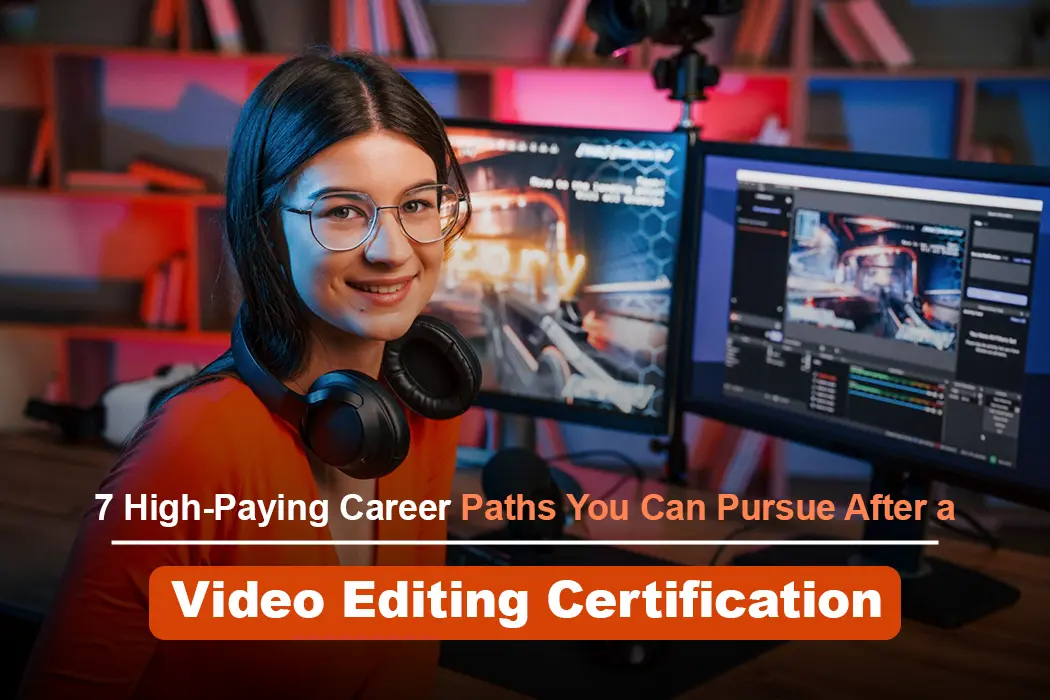
7 High-Paying Career Paths You Can Pursue After a Video Editing Certification
In the digital age, video is no longer just a form of entertainment; it is the primary language of global communication. From the streaming giants of Hollywood to the rapid-fire clips on social media, the demand for high-quality visual storytelling has reached an all-time high. However, as the market becomes saturated with content, the barrier to entry for professionals has shifted. It is no longer enough to simply know how to "cut" a clip. To command a high salary and secure a spot at top-tier firms, a Video Editing Certification has become a vital credential that proves technical mastery and creative discipline.
A certification does more than just teach you how to use software like Adobe Premiere Pro or DaVinci Resolve. It validates your understanding of pacing, narrative structure, color theory, and sound design. If you are looking to pivot your career or level up your freelance game, here are seven high-paying career paths you can pursue with a professional certification in video editing.
1. Commercial and Advertising Editor
The advertising industry is one of the most lucrative sectors for video editors. Brands are willing to pay a premium for editors who can tell a compelling story in 15, 30, or 60 seconds. A commercial editor’s job is to blend psychology with artistry, ensuring that every frame drives the viewer toward a specific action.
With a Video Editing Certification, you demonstrate to agencies that you understand the technical requirements of high-stakes broadcast and digital campaigns. These roles often involve working closely with creative directors and high-profile clients, making it a fast-paced but financially rewarding path.
2. Film and Television Editor
This is often considered the "Holy Grail" of the editing world. While breaking into Hollywood or major streaming networks like Netflix and HBO requires persistence, having a formal certification provides the foundational knowledge of industry-standard workflows.
Film editors are responsible for the "final rewrite" of a movie. They manage massive amounts of data, sync complex multi-cam shots, and work through hundreds of versions of a single scene to find the perfect emotional beat. Because of the technical complexity and the time commitment involved, senior film editors are among the highest earners in the creative industry.
3. Corporate Communications Specialist
Large corporations have transitioned into mini-media houses. They need internal training videos, executive announcements, and promotional content for stakeholders. This role is perfect for those who prefer a stable, 9-to-5 environment with the benefits of a corporate salary.
Interestingly, many IT-focused organizations that offer technical training such as an Android Development Training Course, Video Editing Course, or cloud computing workshops rely heavily on skilled editors to produce their educational modules. A certified editor ensures that complex technical information is presented in a digestible, professional, and engaging format.
4. Post-Production Supervisor
If you have a knack for organization and leadership, the path of a Post-Production Supervisor might be your calling. This role is less about "hands-on" cutting and more about managing the entire pipeline. You oversee editors, sound designers, colorists, and VFX artists to ensure the project stays on schedule and under budget.
A Video Editing Certification is crucial here because you cannot manage a technical team without understanding the nuances of the software and the hurdles they face daily. It is a high-responsibility role that commands a significant six-figure salary in major production hubs.
5. Social Media Content Strategist & Lead Editor
The "Creator Economy" is a multi-billion dollar industry. High-end YouTubers and influencers now run production companies that rival traditional studios. These creators are looking for lead editors who can maintain their brand’s aesthetic while optimizing videos for retention and algorithms.
As a certified professional, you bring a level of polish that the average "self-taught" editor might lack. Whether it’s creating high-energy transitions or implementing advanced motion graphics, your expertise helps creators scale their business, and they are often willing to offer profit-sharing or high retainers for that value.
6. Multimedia Journalist
Newsrooms have evolved. Modern journalists are expected to be "one-man bands" who can report, shoot, and edit their stories for digital platforms. Certified video editors in the journalism field are highly valued because they can take raw, breaking-news footage and turn it into a coherent, ethical, and impactful news package in a matter of minutes. This role is ideal for those who crave variety and want to be at the forefront of current events.
7. VFX and Motion Graphics Artist
While some consider VFX a separate field, the lines are increasingly blurred. Most high-end video editing roles now require a working knowledge of motion graphics. By specializing in visual effects alongside your editing skills, you become a "double threat" in the job market.
From removing unwanted objects in a frame to creating entire digital environments, VFX artists are essential for modern cinematography. Because this is a highly technical niche, the pay scales are significantly higher than generalist roles.
Why Formal Training Matters in 2026
The landscape of professional development is changing. Much like how a developer might explore Why Python is the Perfect for Future Engineers to understand the backbone of modern software, a video editor must understand the backbone of digital storytelling.
Self-teaching through random tutorials can leave "knowledge gaps" that become apparent during high-pressure professional assignments. A Video Editing Certification ensures you have a 360-degree understanding of:
- Workflow Optimization: Learning how to manage projects so your computer doesn't crash and your files stay organized.
- Color Grading: Moving beyond simple filters to create a professional "look" that evokes specific emotions.
- Audio Engineering: Ensuring the dialogue is crisp and the music mix is balanced a hallmark of professional work.
- Legal & Ethical Standards: Understanding copyright laws and licensing, which is critical for corporate and commercial work.
Conclusion
The path to a high-paying career in video editing is paved with more than just talent; it requires a commitment to professional standards. Whether you want to work on the next cinematic masterpiece, manage a corporate media team, or help a brand go viral, your journey starts with the right credentials.
By obtaining a Video Editing Certification, you aren't just learning a tool you are investing in a career that is central to the future of the digital economy. The tools will continue to evolve, but the ability to craft a story that moves an audience will always be a skill worth paying for.